Did the swing change?
We went back to the video.
A case study of one young player's swing: repeatable practice footage, specific coaching cues, and a follow-up review six weeks later.
What the records show
Baseline: August 12, 2026 • Retest: September 26, 2026Watch the two actual swings
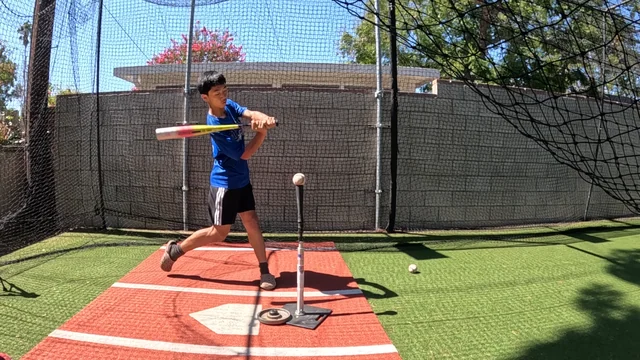
These clips are two representative swings from separate sessions, matched approximately by swing phase. They are not synchronized multi-camera captures, and the selection alone does not establish consistency across all swings.
The swing, one phase at a time
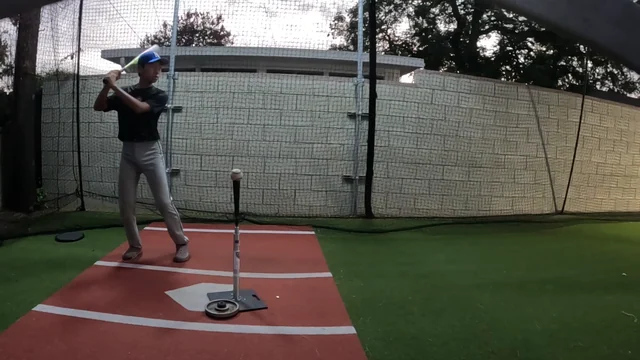
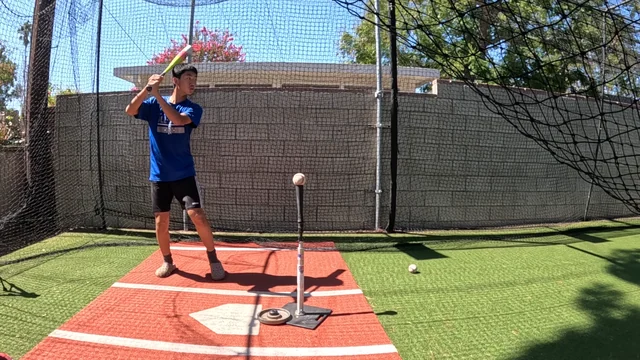
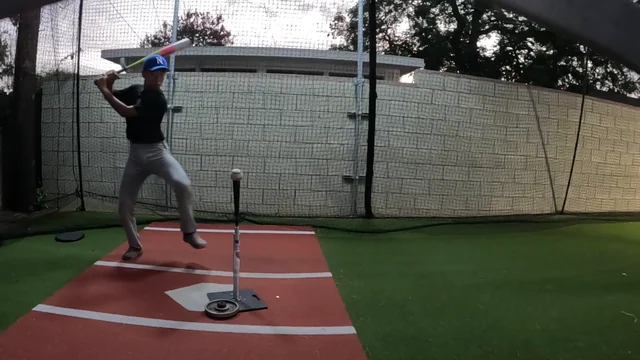
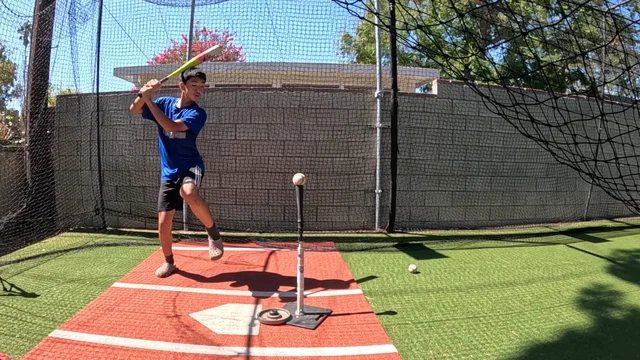
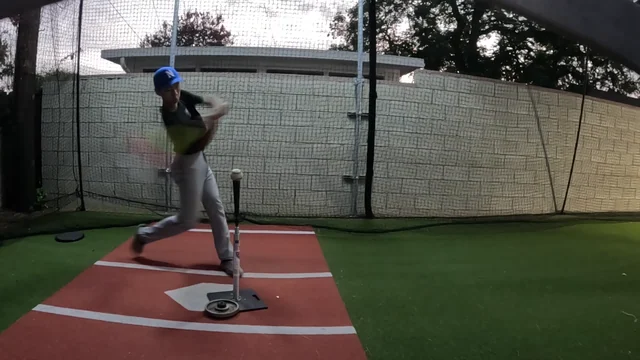
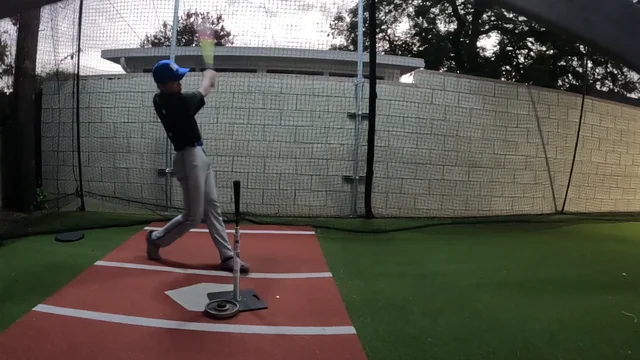
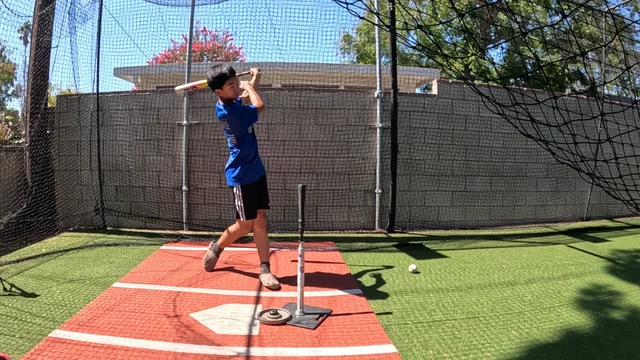
The supplied demo includes selected frames from the two recordings; the phase labels are approximate and have not been independently re-verified against the originals. Camera position and background differ across sessions; angle measurements cannot be compared as calibrated laboratory values.
Six-category coaching rubric
Ratings are out of 10 per category. These values summarize a coach-reviewed video report; they are not automatic outputs of the public Python script.
Coaching priorities in the reports
The August review highlighted a step-across tendency during tee swings, a body-and-arms-together pattern, and early barrel wrap in some swings.
Training priorities:
- Stride-and-hold to check landing direction.
- Stay in the back hip during the forward move.
- Top-hand and one-hand connection drills.
- Keep the bat traveling through the hitting zone longer.
September interpretation: The report noted cleaner stride direction, somewhat improved separation, longer through-zone action, and a more controlled finish. It also documented persistent limitations.
A second contact-quality score was deliberately not assigned because the September footage did not consistently show enough early ball flight.
Archived pose-overlay example
An archived clip from the project folder shows a skeleton overlay and on-screen two-dimensional reference values such as knee, elbow, shoulder-line, hip-line and torso angles.
Important separation: The video-overlay demonstration and the six-category coaching scores are different outputs. The public V3 Python repository does not automatically produce the coaching rubric scores shown above.
This annotated clip existed in Drive before this demo was assembled. Its exact runtime version and measurement accuracy have not been independently verified here. It should not be described as a new validated code run.
How the coaching loop worked
Save the original side/back, tee/toss videos.
Record observable patterns and one or two training goals.
Use targeted drills between sessions.
Record again and compare with explicit uncertainty.
What this case does not establish
- No proven causal effect of the training drills.
- No validated 3D biomechanics or joint-force measurement.
- No automated score generated by the current public Python code.
- No measured increase in exit velocity or a valid September contact-quality score.
- No claim that this single player represents all program participants.
Source and review record
| Raw baseline | Leo Side Tee • 2026-08-12 • original GoPro MP4 |
| Raw retest | Leo Side Tee • 2026-09-26 • original MP4 |
| Coaching summary | Leo Integrated Baseline Report; Vincent coaching notes |
| Rubric comparison | Leo Hitting Analysis Report — Retest 1 (2026-09-26) |
| Pose demo | Leo_Side_Tee_Hitting_Analysis_Clip.mp4, archived in Drive |
Published with family authorization. Source/context labels distinguish coaching ratings from exploratory video measurements.